

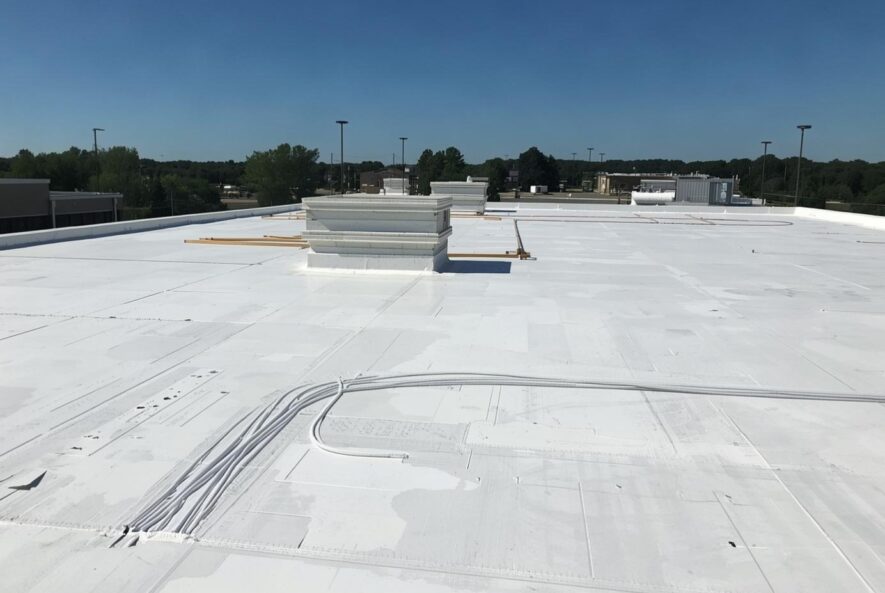
Quick answer: TPO roofing helps reduce energy bills in Texas by acting as a reflective cool roof. The white, single-ply membrane reflects up to 80% of the sun’s UV rays, lowering roof surface temperatures by 50 to 80°F. This drastically decreases air conditioning usage, saving Dallas-Fort Worth property owners 15 to 30% on summer cooling costs.
Texas summers consistently deliver temperatures exceeding 100°F, forcing air conditioning units to work continuously. High AC usage leads to skyrocketing utility costs for both commercial and residential properties. One of the most effective solutions to combat this intense heat is installing a Thermoplastic Polyolefin (TPO) roof. As a highly reflective “cool roof,” this system actively fights solar heat gain before it penetrates the building envelope.
Property owners using a TPO roofing system experience significantly lower indoor temperatures. By reflecting sunlight rather than absorbing it, TPO roofing Texas energy bills can drop substantially, saving property owners thousands of dollars over the lifespan of the roof.
ABP Construction has installed hundreds of energy-efficient TPO roofs across Dallas, Fort Worth, Arlington, Plano, and Irving. By upgrading your roofing material, you can achieve immediate relief from excessive cooling expenses.
What is TPO roofing and why is it a popular choice for Texas buildings?
Thermoplastic Polyolefin (TPO) is a single-ply roofing membrane composed of synthetic rubber and reinforcing fiberglass. Manufacturers design TPO roofing specifically to combine the durability of rubber with the performance of heat-welded seams.
This material suits the extreme Texas climate perfectly. A TPO roof features a bright white surface that naturally repels harsh sunlight. The heat-welded seams create a watertight bond that resists heavy rain, while the flexible membrane withstands impact from seasonal hailstorms. Because TPO roofing systems resist ultraviolet (UV) degradation, the material will not crack or blister easily under the relentless Dallas sun.
How exactly does TPO roofing reduce energy bills in extreme heat?
The scientific principle behind TPO roofing relies on the Solar Reflectance Index (SRI) and the albedo effect. Albedo measures how much sunlight a surface reflects back into the atmosphere. Dark traditional roofs have a low albedo, absorbing massive amounts of heat. White TPO roofing has a high albedo, reflecting up to 80% of incoming UV rays.
When a roof reflects sunlight, the surface temperature drops. According to the Department of Energy, a highly reflective roof can stay 50 to 80°F cooler than a dark roof during peak summer heat. Because the roof surface remains cooler, less heat transfers into the building’s interior. This reduction in heat transfer means your HVAC system runs less frequently and consumes less electricity. Many TPO membranes are ENERGY STAR certified due to these proven thermal benefits.
To see how these systems benefit local businesses, Explore our commercial roofing services in Dallas-Fort Worth.
What are the real energy savings with TPO roofing in Dallas-Fort Worth?
Property owners can expect to see a 15 to 30% reduction in cooling costs after installing a TPO roof. For a large commercial facility in Dallas-Fort Worth spending $3,000 monthly on summer air conditioning, a 20% reduction saves $600 a month. Over a single Texas summer, these cool roof energy savings DFW add up quickly.
Several factors influence your exact savings, including building size, the quality of underlying insulation, and your existing HVAC efficiency. Because the monthly utility savings are so significant, the return on investment (ROI) for a TPO roof upgrade usually falls between 3 to 7 years. You can Compare TPO vs Metal Roofing for energy efficiency to determine which high-performance material offers the best ROI for your specific property type.
How does TPO roofing compare to other roofing types for energy efficiency in Texas?
TPO consistently outperforms traditional flat roofing materials in energy efficiency. Here is how it compares to the alternatives:
- TPO vs. EPDM: Ethylene Propylene Diene Monomer (EPDM) is a durable rubber roof, but it is traditionally black. EPDM absorbs heat, making cooling a building much more expensive. Choose TPO over EPDM if reducing summer AC costs is your primary goal.
- TPO vs. Modified Bitumen: Modified Bitumen utilizes asphalt layers. While installers can add reflective coatings, the base material still retains heat. TPO offers superior out-of-the-box reflectivity.
- TPO vs. Asphalt Shingles: Asphalt shingles absorb heat and are poorly suited for flat or low-slope structures. TPO dominates flat-roof applications because it prevents water pooling while reflecting heat.
If you own a sloped residential property, asphalt or metal might still be appropriate. See our residential roofing options in Dallas TX for a breakdown of sloped roof materials.
What are the additional benefits of TPO roofing beyond energy savings?
A TPO roof reduce cooling costs Texas properties face, but it also delivers several structural and environmental advantages:
- Storm and hail durability: The flexible membrane absorbs impacts from hail without puncturing, protecting your property during severe DFW spring storms.
- Low maintenance requirements: TPO resists dirt accumulation, mold, and algae growth. It requires minimal upkeep compared to gravel-surfaced built-up roofs.
- Long lifespan: With professional installation, a TPO roofing system typically lasts 15 to 30 years.
- Environmental impact: By reflecting heat, TPO roofs help mitigate the urban heat island effect, keeping entire city blocks cooler in Dallas and Fort Worth.
If extreme weather does compromise your roof, ABP Construction can assist. Learn how we help with roof insurance claims after storms to ensure your property remains protected.
What are the best practices for maximizing energy savings with a TPO roof?
Installing the membrane is only the first step. To achieve the highest possible energy efficiency, building owners must follow specific best practices.
First, install rigid polyisocyanurate (polyiso) insulation beneath the TPO membrane. High R-value insulation prevents any residual heat from entering the building. Second, rely on certified professionals for the installation. Poorly welded seams will allow hot air and moisture to infiltrate the system, ruining the energy efficiency. Finally, schedule bi-annual maintenance. Keep the white surface clean so it maintains its high albedo effect. Dirt and debris reduce reflectivity over time. Read our guide on preventing roof leaks in Dallas to learn more about proper roof maintenance.
Why should you choose ABP Construction for your TPO roofing project in Dallas-Fort Worth?
ABP Construction brings decades of specialized experience to the DFW metroplex. We focus heavily on local communities, proudly serving Dallas, Fort Worth, Arlington, Plano, and Irving.
Our crews hold certifications from top industry manufacturers, including GAF and Atlas, ensuring your energy efficient TPO roofing Dallas project meets the highest quality standards. We back our installations with robust warranties so your investment remains secure. Furthermore, our team provides flexible financing options and comprehensive assistance with insurance claims, making your roof upgrade completely stress-free.
Frequently Asked Questions
How much does TPO roofing cost compared to alternatives?
TPO roofing generally costs between $5 and $10 per square foot installed. It is slightly more expensive than EPDM but significantly cheaper than metal roofing. The exact cost depends on roof accessibility, insulation thickness, and total square footage.
How long does a TPO roof installation take?
For an average commercial building, a professional team can complete a TPO roof installation in 3 to 7 days. The timeline will vary based on whether the crew must tear off an existing roof or if they are installing the TPO directly over the old system.
What are the main risks associated with TPO roofing?
The primary risk of TPO roofing is improper seam welding. If the contractor fails to heat-weld the seams at the correct temperature, the membrane can separate and allow water infiltration. You must hire a certified roofing contractor to avoid this issue.
Should residential homes use TPO roofing?
Choose TPO roofing for a residential home only if the property features a flat or low-slope roof design. TPO is highly effective for modern flat-roof homes, patios, and home additions, but it is not designed for steeply pitched traditional residential roofs.
Secure Your Free Energy-Efficient Roofing Quote Today
Stop overpaying for air conditioning every summer. A reflective TPO roof is a proven, scientific solution for lowering your energy expenses while protecting your property from harsh weather. Trust the certified experts at ABP Construction to handle your installation correctly the first time.
Get a Free Energy-Efficient Roofing Quote Today by calling us at (972) 977-9855

